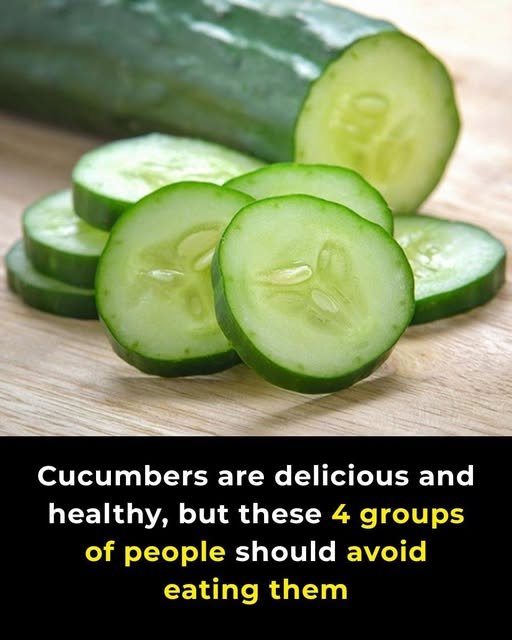
Cool, crisp, and incredibly refreshing, cucumbers are a staple in salads, sandwiches, and healthy snacks around the world. They are low in calories, high in water, and packed with nutrients that make them an excellent addition to a balanced diet.
However, despite their many health benefits, cucumbers may not be suitable for everyone. Certain medical conditions or sensitivities can make eating cucumbers uncomfortable—or even risky in some cases.
Here’s who should consider limiting or avoiding cucumbers and why.
The Health Benefits of Cucumbers
Before discussing who should be cautious, it’s worth understanding why cucumbers are often considered a healthy food.
Cucumbers are:
- About 95% water, helping support hydration.
- Low in calories, making them a weight-friendly snack.
- A source of vitamin K, which supports normal blood clotting and bone health.
- Rich in antioxidants that help protect cells from damage.
- A source of fiber, especially when eaten with the peel, which supports healthy digestion.
For most healthy adults, cucumbers are a nutritious and refreshing choice.
1. People With Cucumber Allergies
Although uncommon, some people are allergic to cucumbers.
Symptoms may include:
- Itching or tingling in the mouth
- Swollen lips or tongue
- Skin rash or hives
- Sneezing or watery eyes
- Difficulty breathing in severe cases
Anyone who experiences signs of an allergic reaction should stop eating cucumbers and seek medical advice. Severe reactions require emergency medical care.
2. People With Sensitive Digestion
Some individuals experience digestive discomfort after eating cucumbers, particularly if they eat large amounts or consume the peel.
Possible symptoms include:
- Bloating
- Gas
- Mild stomach discomfort
- Indigestion
Peeling the cucumber or eating smaller portions may reduce these symptoms for some people.
3. People With Kidney Disease
Cucumbers contain potassium. While healthy kidneys can usually regulate potassium levels without difficulty, people with advanced kidney disease may need to limit foods high in potassium based on their healthcare provider’s recommendations.
If you have kidney disease, ask your doctor or dietitian whether cucumbers fit into your dietary plan.
4. People Taking Blood-Thinning Medication
Cucumbers contain vitamin K, although not in extremely high amounts.
People taking medications such as blood thinners may be advised to keep their vitamin K intake consistent rather than dramatically increasing or decreasing it. This doesn’t necessarily mean avoiding cucumbers—it simply means maintaining a stable diet and following your healthcare provider’s guidance.
5. People With Oral Allergy Syndrome
Some people who are allergic to certain pollens may experience itching or mild swelling in the mouth after eating raw fruits or vegetables, including cucumbers.
Cooking vegetables often reduces this reaction, but anyone with recurring symptoms should consult an allergist.
6. People Sensitive to Certain Compounds
Occasionally, cucumbers contain naturally occurring bitter compounds called cucurbitacins. In very high amounts, these compounds can make cucumbers taste unusually bitter and may cause stomach upset.
If a cucumber tastes extremely bitter, it’s best not to eat it.
Tips for Enjoying Cucumbers Safely
To get the most benefit from cucumbers:
- Wash them thoroughly before eating.
- Store them in the refrigerator to keep them fresh.
- Eat them with the peel if tolerated, as much of the fiber is found there.
- Pair them with other vegetables for a balanced meal.
- Avoid eating spoiled or unusually bitter cucumbers.
The Bottom Line
For most people, cucumbers are a healthy, hydrating, and nutritious food that can be enjoyed regularly as part of a balanced diet. However, individuals with allergies, certain digestive issues, advanced kidney disease, or specific dietary restrictions may need to limit or avoid them.
If you have an ongoing medical condition or are unsure whether cucumbers are appropriate for your diet, it’s best to consult your healthcare provider or a registered dietitian for personalized advice.