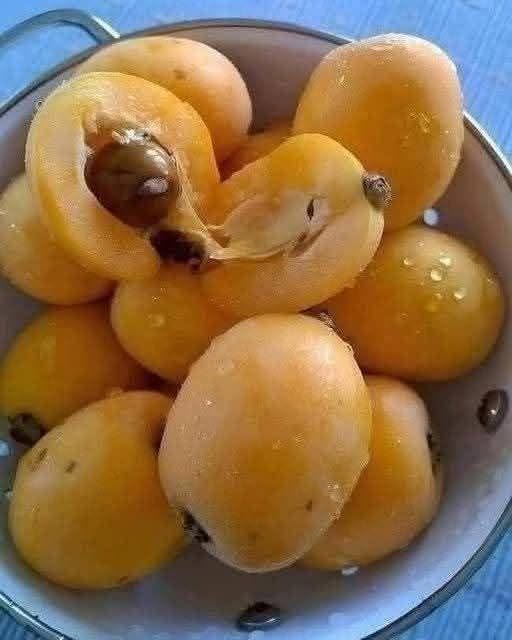
Yes, those fruits are Loquat (Eriobotrya japonica), a subtropical fruit tree native to southeastern China and now cultivated in many parts of Asia, the Mediterranean, the Middle East, and other warm regions.
Identification
Loquats are typically:
- Round, oval, or pear-shaped
- Yellow to orange when ripe
- About 3–5 cm (1–2 inches) long
- Smooth-skinned and slightly fuzzy in some varieties
- Contain 1–5 large brown seeds in the center
Taste
The flavor is often described as a blend of:
- Apricot
- Peach
- Citrus
- Mango
Depending on ripeness, they can range from sweet to pleasantly tart.
Nutrition
Loquats are relatively low in calories and provide:
- Dietary fiber
- Vitamin A (through carotenoids)
- Vitamin C
- Potassium
- Antioxidants such as polyphenols and carotenoids
How they’re eaten
People commonly:
- Eat them fresh after peeling (though the skin is edible)
- Make jams and jellies
- Use them in pies and desserts
- Prepare syrups and beverages
- Preserve them by canning
Growing conditions
The tree, Eriobotrya japonica, is evergreen and prefers:
- Mild winters
- Warm summers
- Well-drained soil
- Subtropical or Mediterranean climates
A mature tree can produce large clusters of fruit in late winter or spring.
Important note
The flesh is edible, but the seeds should not be eaten. Like the seeds of some related fruits, they contain compounds that can release cyanide when metabolized and may be harmful if crushed and consumed in significant amounts.
If you have a specific photo of the fruit tree or fruit cluster, I can help determine the exact loquat variety or assess its ripeness.