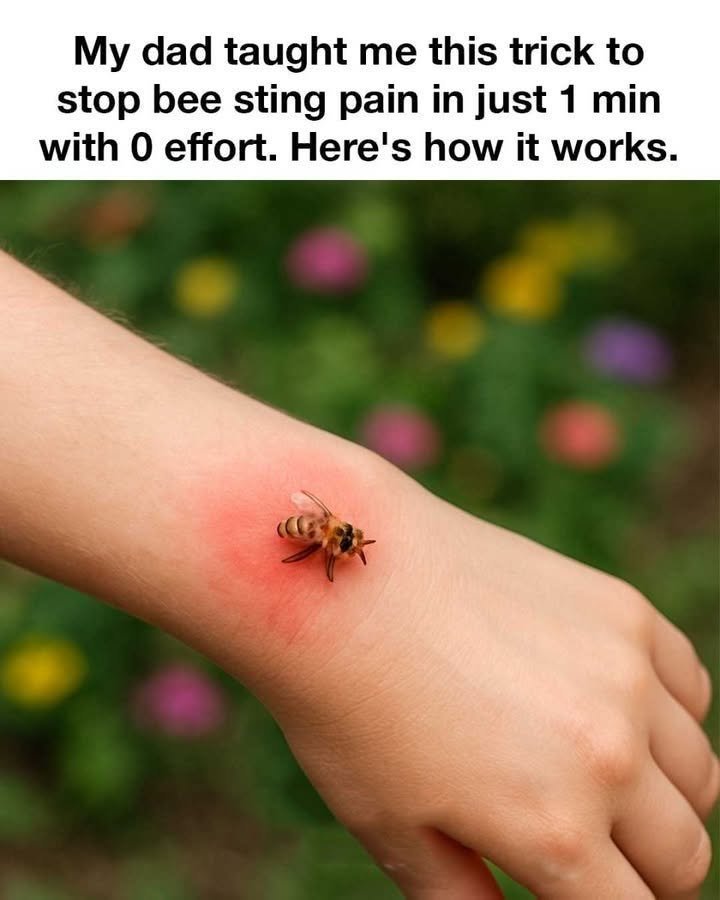
A bee sting can be painful, unexpected, and alarming. The sharp sting is often followed by redness, swelling, and itching that can last for hours or even days. Social media is full of claims about “instant” remedies, but there’s no trick that can guarantee all bee sting pain disappears in just one minute.
However, taking the right first-aid steps as soon as possible can reduce pain, swelling, and discomfort.
What Happens During a Bee Sting?
When a honeybee stings, it leaves behind a tiny barbed stinger attached to a venom sac. The venom continues to enter the skin until the stinger is removed, which is why acting quickly is important.
Typical symptoms include:
- Sharp, burning pain
- Redness around the sting
- Mild swelling
- Itching as the area heals
Most bee stings can be treated safely at home if the person is not allergic.
Step 1: Remove the Stinger Immediately
The most important first step is to remove the stinger as quickly as possible.
You can:
- Gently scrape it away with the edge of a credit card or your fingernail.
- If necessary, use clean tweezers to remove it carefully without squeezing the attached venom sac more than necessary.
The sooner the stinger is removed, the less venom enters the skin.
Step 2: Wash the Area
Clean the sting site with:
- Mild soap
- Cool running water
This helps reduce the risk of infection.
Step 3: Apply a Cold Compress
One of the most effective ways to ease pain is to place a cold pack or a bag of ice wrapped in a thin towel on the area for 10–20 minutes.
Cold helps:
- Reduce swelling
- Numb pain
- Slow inflammation
Avoid placing ice directly on bare skin.
Step 4: Relieve Pain and Itching
If needed, you may use:
- Hydrocortisone cream for itching (following package directions)
- Calamine lotion
- An oral antihistamine if itching is bothersome (as advised by a healthcare professional or according to the product label)
- An over-the-counter pain reliever if appropriate
Always follow the product instructions and check with a healthcare provider if you’re unsure.
Home Remedies: Do They Work?
Many home remedies are shared online, including:
- Baking soda paste
- Honey
- Aloe vera gel
- Oatmeal paste
Some people find these soothing, but scientific evidence for their effectiveness is limited. They should not replace proper first aid.
What Not to Do
Avoid these common mistakes:
- Don’t scratch the sting.
- Don’t apply dirt or unclean substances.
- Don’t try to cut the skin.
- Don’t use heat immediately after the sting.
- Don’t ignore symptoms if they become severe.
Watch for Signs of an Allergic Reaction
Although most bee stings are mild, some people experience a serious allergic reaction called anaphylaxis, which is a medical emergency.
Call emergency medical services immediately if the person develops:
- Difficulty breathing
- Wheezing
- Swelling of the face, lips, tongue, or throat
- Widespread hives
- Dizziness or fainting
- Rapid heartbeat
- Confusion
People who have been prescribed an epinephrine auto-injector should use it immediately if anaphylaxis is suspected and then seek emergency medical care.
How Long Does a Bee Sting Last?
For most people:
- Sharp pain usually improves within minutes to a few hours.
- Redness and swelling may last 1–3 days.
- Itching can continue for several days.
Large local reactions may last longer but are not always a sign of allergy.
Tips to Avoid Future Bee Stings
You can lower your risk by:
- Wearing shoes outdoors.
- Avoiding strong perfumes near flowering plants.
- Keeping food and sugary drinks covered outside.
- Staying calm if a bee lands on you—avoid swatting at it.
- Wearing gloves when gardening.
The Bottom Line
There isn’t a secret trick that can guarantee bee sting pain disappears in one minute, despite what viral posts claim. The best-supported first aid is to remove the stinger quickly, wash the area, and apply a cold compress. These simple steps can significantly reduce pain and swelling.
If symptoms are severe or signs of an allergic reaction appear, seek emergency medical care immediately. Prompt treatment can be lifesaving.