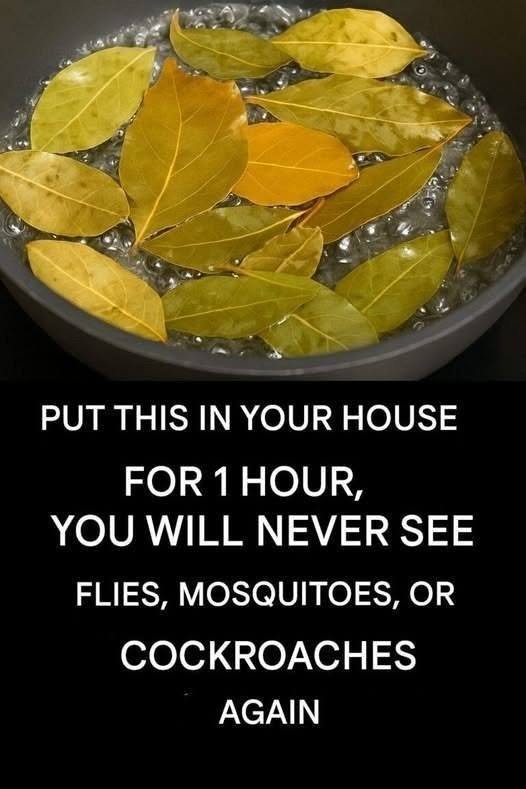
If you’re looking for a natural way to discourage unwanted insects from entering your home, you may be surprised to learn that a common kitchen ingredient could help. Bay leaves, often used to flavor soups and stews, have long been included in traditional household practices as a natural insect deterrent.
While bay leaves won’t eliminate a serious infestation, their strong aroma may help discourage certain insects from lingering in specific areas. Best of all, they’re inexpensive, easy to use, and free from the harsh chemicals found in many commercial bug sprays.
Why Bay Leaves May Deter Insects
Bay leaves contain aromatic compounds and essential oils, including eucalyptol (1,8-cineole), that produce a scent many people find pleasant. Some insects, however, appear to dislike these strong aromas.
Although scientific evidence is limited and results can vary by insect species, bay leaves have traditionally been used to help deter:
- Pantry weevils
- Flour beetles
- Some ants
- Cockroaches
- Moths
- Silverfish
Keep in mind that bay leaves are generally considered a repellent, not an insecticide. They may encourage insects to avoid certain areas but are unlikely to solve an active infestation on their own.
Where to Place Bay Leaves
To make the most of this simple household trick, place whole dried bay leaves in areas where insects are commonly found.
Good locations include:
- Pantry shelves
- Flour and rice storage containers (place the leaves outside food packaging or in sealed containers where they won’t mix with food)
- Kitchen cabinets
- Under the sink
- Near windowsills
- Around doorways
- Inside closets
- Storage boxes
Replace the leaves every few weeks or whenever their scent begins to fade.
Crush Them for a Stronger Aroma
Some people lightly crush bay leaves before placing them around the home. Crushing the leaves releases more of their natural oils, producing a stronger scent that may enhance their repellent effect.
Be careful not to scatter leaf fragments where they could contaminate food or create a mess.
Combine Bay Leaves With Good Housekeeping
Natural remedies work best when paired with good cleaning habits. To reduce the chances of attracting insects:
- Store dry foods in airtight containers.
- Clean up crumbs and spills promptly.
- Empty trash regularly.
- Fix water leaks that create moisture.
- Seal cracks around doors and windows.
- Declutter storage spaces where pests can hide.
A clean, dry environment is one of the most effective ways to discourage many common household pests.
Other Natural Insect Deterrents
If you’d like additional natural options, consider:
- Peppermint oil (for some ants and spiders)
- Lavender sachets (often used for moths)
- Cedar blocks (commonly placed in closets)
- Cloves (traditionally used in pantries)
- Citrus peels (used in some homemade pest deterrents)
These methods may help deter certain insects, but their effectiveness varies and they should not replace proven pest control measures when infestations are significant.
When Natural Remedies Aren’t Enough
If you’re seeing large numbers of insects, finding droppings, noticing damage to food or furniture, or dealing with recurring pest problems, it’s time to take additional action.
You may need to:
- Identify the type of pest.
- Remove the source of food or moisture.
- Use appropriate pest-control products according to the label.
- Contact a licensed pest control professional for persistent infestations.
Natural remedies like bay leaves are best viewed as part of a broader prevention strategy rather than a complete solution.
Final Thoughts
The humble bay leaf is more than just a flavorful cooking ingredient. Its strong natural aroma has made it a popular traditional choice for helping discourage certain household insects, especially in pantries and cupboards.
While it won’t eliminate an infestation, placing dried bay leaves in strategic locations—combined with proper cleaning, food storage, and home maintenance—may help reduce the likelihood of unwanted pests. It’s an affordable, chemical-free trick that’s easy to try and may add one more layer of protection to your home.
Disclaimer: The effectiveness of bay leaves as an insect repellent is supported mainly by traditional use and limited scientific evidence. Results may vary depending on the type of insect and the severity of the problem. Persistent infestations should be addressed using proven pest management methods or by consulting a pest control professional.