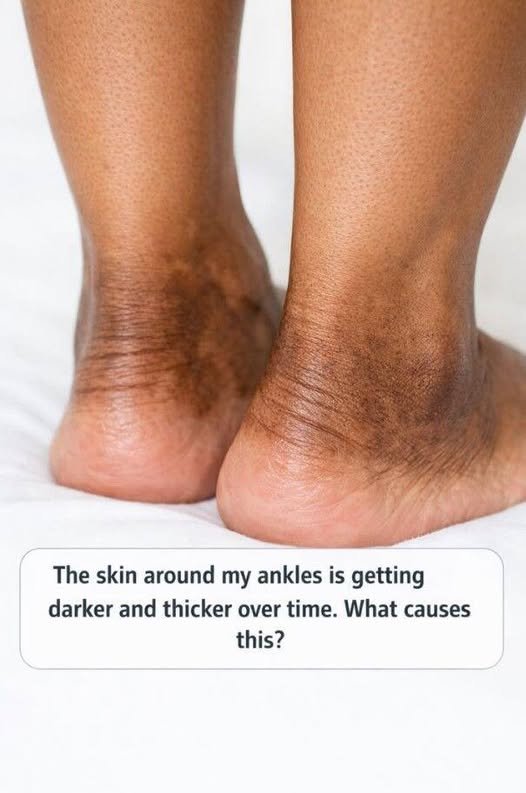
Have you noticed that the skin around your ankles has gradually become darker, thicker, or rougher? While it may seem like a cosmetic issue, changes in the skin around the ankles can sometimes point to an underlying medical condition or everyday habits that are affecting your skin.
The good news is that many causes are treatable once you identify what’s behind the problem. Here’s what you should know.
1. Friction and Pressure
One of the most common causes of dark, thickened skin around the ankles is repeated friction.
This can happen from:
- Tight socks or shoes
- Boots rubbing against the skin
- Frequent kneeling or sitting cross-legged
- Dry skin being constantly scratched
Over time, the skin responds by becoming thicker (a process called lichenification) and may also develop darker pigmentation.
2. Chronic Dry Skin (Xerosis)
Dry skin can make the ankles appear rough, flaky, and darker than the surrounding skin.
Common causes include:
- Cold or dry weather
- Hot showers
- Harsh soaps
- Aging
- Not moisturizing regularly
Keeping the area well-moisturized can often improve its appearance.
3. Venous Insufficiency (Poor Circulation)
If the veins in your legs have trouble returning blood to your heart, blood can pool around the ankles.
Symptoms may include:
- Brown or reddish discoloration
- Swollen ankles
- Aching or heavy legs
- Itchy skin
- Thickened skin over time
This condition, called chronic venous insufficiency, is more common in older adults, people who stand for long periods, and those with varicose veins.
4. Diabetes and Insulin Resistance
Dark, velvety patches of skin can sometimes be a sign of acanthosis nigricans, which is linked to insulin resistance and diabetes.
Although it most commonly affects the neck, armpits, and groin, it can occasionally appear on other areas, including the ankles.
If you also have:
- Excess weight
- Prediabetes
- Type 2 diabetes
- PCOS (polycystic ovary syndrome)
it’s worth discussing this change with your healthcare provider.
5. Eczema or Chronic Dermatitis
Repeated inflammation from eczema or allergic reactions can cause skin to become:
- Darker
- Thicker
- Itchy
- Rough
Constant scratching further thickens the skin and increases pigmentation.
6. Post-Inflammatory Hyperpigmentation
After an injury, insect bite, rash, or skin infection heals, it may leave behind darker skin.
This is known as post-inflammatory hyperpigmentation and is more noticeable in people with medium to dark skin tones.
7. Obesity
Extra body weight increases pressure on the legs and may contribute to:
- Poor circulation
- Skin friction
- Insulin resistance
These factors can all play a role in ankle skin changes.
8. Certain Medical Conditions
Less commonly, darker or thicker skin may be associated with conditions such as:
- Thyroid disorders
- Lymphedema
- Rare hormonal disorders
- Some chronic inflammatory skin diseases
A healthcare professional can help determine whether additional testing is needed.
What Can You Do?
Depending on the cause, these steps may help:
- Moisturize daily with a fragrance-free cream or ointment.
- Avoid tight footwear that rubs the ankles.
- Gently exfoliate once or twice a week (avoid harsh scrubbing).
- Wear compression stockings if recommended for venous insufficiency.
- Maintain a healthy weight.
- Manage blood sugar if you have diabetes or prediabetes.
- Protect the area from further irritation.
If itching is severe or a rash is present, avoid self-treating with strong steroid creams unless advised by a healthcare professional.
When Should You See a Doctor?
Schedule a medical evaluation if:
- The darkening is spreading rapidly.
- The skin becomes painful, swollen, or warm.
- You develop open sores or ulcers.
- One leg is much more swollen than the other.
- You have symptoms of diabetes, such as increased thirst or frequent urination.
- The discoloration persists despite good skin care.
A healthcare provider may recommend blood tests, assess your circulation, or refer you to a dermatologist if needed.
Final Thoughts
Darker, thicker skin around the ankles is often caused by friction, dry skin, or poor circulation, but it can also be a sign of conditions such as diabetes, eczema, or chronic venous insufficiency. While many cases improve with proper skin care and addressing the underlying cause, persistent or worsening changes should be evaluated by a healthcare professional.
Paying attention to these skin changes early can help identify and treat any underlying health issues before they become more serious.