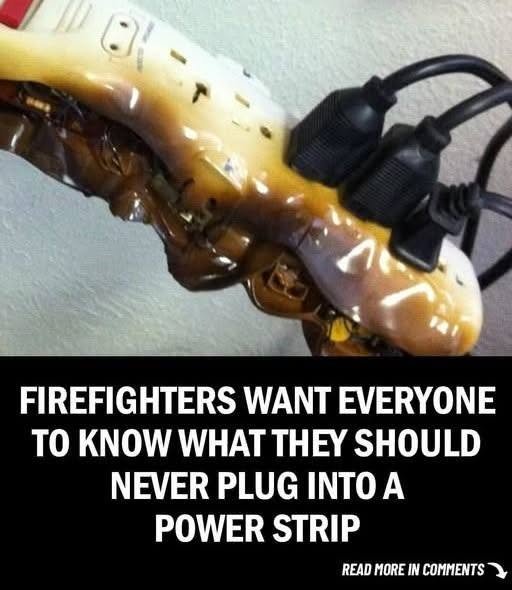
Power strips are convenient for expanding the number of available outlets, but they’re not designed to handle every type of electrical device. Plugging high-power appliances into a standard power strip can overload the circuit, increasing the risk of overheating, damaged equipment, or even electrical fires.
Here’s a closer look at the devices you should avoid plugging into a power strip and what to do instead.
Why Power Strip Safety Matters
Every power strip has a maximum electrical load, usually around 1,800 watts on a standard 15-amp household circuit (this can vary by country and product). When multiple high-wattage appliances run at the same time, the strip can overheat or trip its built-in protection.
Using power strips properly helps protect both your home and your electronics.
1. Space Heaters
Portable space heaters use a large amount of electricity and should almost always be plugged directly into a wall outlet.
Using a power strip can:
- Overload the strip
- Cause overheating
- Increase fire risk
Always place heaters on a stable surface and follow the manufacturer’s safety instructions.
2. Air Conditioners
Window and portable air conditioners require significant power, especially when the compressor starts.
Avoid plugging them into:
- Standard power strips
- Extension cords not rated for the load
Instead, use a dedicated wall outlet whenever possible.
3. Refrigerators and Freezers
Although refrigerators don’t draw maximum power continuously, they need extra current each time the compressor starts.
Using a power strip may lead to:
- Voltage drops
- Tripped protection
- Reduced appliance performance
Plug refrigerators and freezers directly into a properly grounded wall outlet.
4. Microwaves
Microwave ovens are among the highest-wattage kitchen appliances.
Running one through a power strip can overload the strip, especially if other devices are connected at the same time.
A dedicated wall outlet is the safer choice.
5. Coffee Makers and Electric Kettles
These appliances heat water quickly by drawing a large amount of electricity.
High heat combined with high wattage makes them poor candidates for standard power strips.
6. Toasters and Toaster Ovens
Heating elements require substantial electrical power.
Using a power strip for these appliances may increase the risk of overheating, particularly if multiple kitchen devices are operating simultaneously.
7. Hair Dryers and Curling Irons
Hair styling tools often use between 1,000 and 2,000 watts.
Because they generate significant heat, they should be plugged directly into a wall outlet.
8. Washing Machines and Dryers
Large household appliances require dedicated electrical circuits in many homes.
Power strips are not designed for these heavy electrical loads.
9. Another Power Strip (Daisy Chaining)
Connecting one power strip into another—known as “daisy chaining”—can overload the original outlet and create a serious fire hazard.
Instead:
- Use a single appropriately rated power strip.
- Install additional wall outlets if more connections are needed.
10. High-Power Cooking Appliances
Avoid plugging these into standard power strips:
- Air fryers
- Electric grills
- Hot plates
- Pressure cookers
- Rice cookers (especially larger models)
Many of these appliances draw over 1,000 watts while heating.
What Is Safe to Plug Into a Power Strip?
Power strips are generally suitable for lower-power electronics, such as:
- Phone chargers
- Laptop chargers
- Computer monitors
- Desktop computers
- Printers (depending on power requirements)
- Routers and modems
- TVs and streaming devices
- Table lamps
- Small speakers
Always stay within the strip’s rated capacity.
Signs Your Power Strip Is Overloaded
Stop using the power strip immediately if you notice:
- It feels hot to the touch.
- You smell burning plastic.
- It frequently trips or shuts off.
- The cord appears damaged.
- There are scorch marks or discoloration.
- Sparks occur when plugging in devices.
Replace damaged power strips rather than attempting to repair them.
Tips for Using Power Strips Safely
To reduce electrical risks:
- Use power strips with built-in overload protection.
- Never cover a power strip with rugs, blankets, or furniture.
- Keep power strips dry and away from water.
- Unplug unused high-power devices when possible.
- Inspect cords regularly for wear or damage.
- Replace old or damaged power strips promptly.
- Follow the manufacturer’s instructions and load limits.
When to Consider a Surge Protector
If you’re connecting valuable electronics such as computers, televisions, or gaming consoles, a surge protector offers additional protection against voltage spikes. Keep in mind that while many surge protectors look like ordinary power strips, surge protection does not increase the amount of power the device can safely handle. High-wattage appliances should still be plugged directly into a wall outlet unless the manufacturer specifically states otherwise.
Final Thoughts
Power strips are excellent for organizing and powering everyday electronics, but they are not a substitute for dedicated wall outlets when it comes to high-power appliances. Space heaters, microwaves, refrigerators, air conditioners, and other heat-producing devices should generally be plugged directly into a properly grounded outlet to reduce the risk of overload and fire.
Using the right outlet for the right appliance is a simple habit that can improve electrical safety and help protect both your home and your devices.
Disclaimer: This article is for general informational purposes only. Electrical systems and safety requirements vary by country and building. Always follow the manufacturer’s instructions and consult a qualified electrician if you’re unsure about the safe use of electrical outlets or power strips.