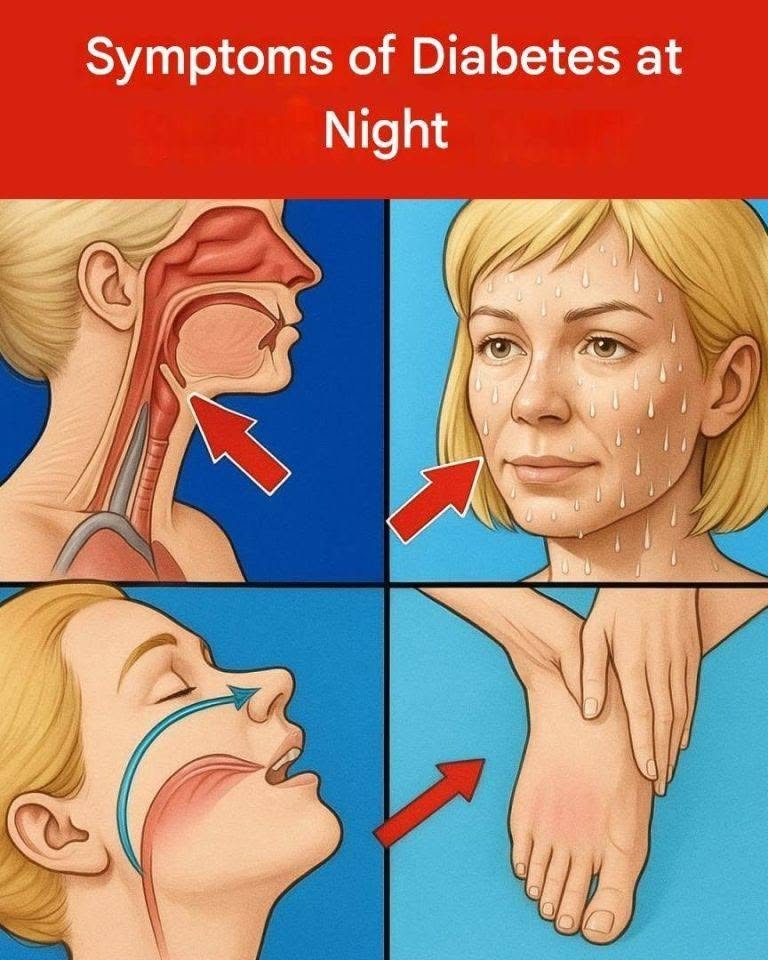
Diabetes can affect the body around the clock, but some symptoms become especially noticeable during the nighttime hours. High or low blood sugar levels may disrupt sleep, cause discomfort, and lead to unusual symptoms that many people overlook. Recognizing these signs early can help you seek medical advice and manage your health more effectively.
1. Frequent Urination During the Night
One of the most common signs of diabetes is waking up multiple times to use the bathroom. When blood sugar levels are high, the kidneys work harder to remove excess glucose from the bloodstream. This process causes the body to produce more urine.
Signs to Watch For
- Waking up two or more times each night to urinate
- Producing large amounts of urine
- Feeling tired during the day due to interrupted sleep
If frequent nighttime urination continues for several weeks, it is worth discussing with a healthcare professional.
2. Excessive Thirst
Many people with diabetes experience intense thirst, especially at night. Because the body loses extra fluids through increased urination, dehydration can develop, triggering persistent thirst.
Signs to Watch For
- Keeping water by the bed every night
- Waking up with a dry mouth
- Feeling thirsty even after drinking fluids
Excessive thirst combined with frequent urination is a classic warning sign of high blood sugar.
3. Night Sweats
Night sweats can occur when blood sugar levels drop too low during sleep, a condition known as nocturnal hypoglycemia. This symptom is more common in people who take insulin or certain diabetes medications.
Signs to Watch For
- Waking up with damp clothing or bedding
- Feeling shaky or weak upon waking
- Experiencing headaches in the morning
If night sweats occur regularly, it is important to speak with your healthcare provider about your blood sugar management plan.
4. Tingling or Numbness in the Feet
Over time, diabetes can damage nerves, a condition called diabetic neuropathy. Symptoms often become more noticeable at night when there are fewer distractions.
Signs to Watch For
- Burning sensations in the feet
- Tingling or “pins and needles” feelings
- Numbness that worsens when lying down
Persistent nerve symptoms should be evaluated by a healthcare professional to prevent further complications.
5. Restless Sleep and Fatigue
Fluctuating blood sugar levels can interfere with sleep quality. People with diabetes may wake frequently throughout the night without realizing the cause.
Signs to Watch For
- Difficulty staying asleep
- Feeling exhausted despite spending enough time in bed
- Morning headaches or irritability
Poor sleep can make blood sugar management more challenging, creating a cycle that affects overall health.
When to See a Doctor
If you regularly experience frequent urination, excessive thirst, night sweats, tingling in your feet, or unexplained sleep disturbances, consider scheduling a medical evaluation. Early diagnosis and treatment of diabetes can help prevent complications and improve quality of life.
Final Thoughts
Nighttime symptoms can provide important clues about your health. Frequent trips to the bathroom, excessive thirst, night sweats, nerve discomfort, and poor sleep may all be signs of diabetes or blood sugar problems. Paying attention to these symptoms and seeking medical guidance can lead to earlier diagnosis and better long-term health outcomes.