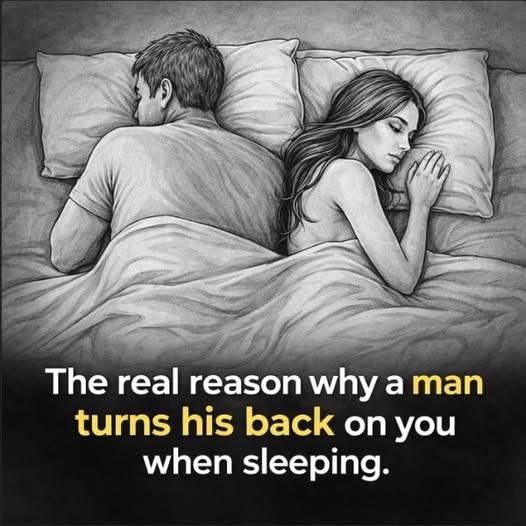
Turning their back on you while sleeping is one of those things that feels emotionally loaded, but in most cases it has a lot more to do with sleep physiology than relationship dynamics.
Here’s a more detailed breakdown of what it can (and cannot) mean.
1. Most of the time: it means nothing emotional
During sleep, the brain is not in a socially aware state. People move through different sleep cycles and naturally shift positions multiple times a night.
Turning away can happen because of:
- Comfort adjustment (spine, hips, shoulders relaxing into a new position)
- Temperature regulation (back-facing can cool the body or reduce heat from another person)
- Pressure relief (avoiding stiffness from lying too long on one side)
- Habitual sleep pattern (many people simply sleep better on one side)
In this sense, the “back turn” is usually just biomechanics, not psychology.
2. It can reflect sleep independence, not emotional distance
Some people naturally sleep more independently even in close relationships. They may:
- Prefer more space to move freely
- Sleep lightly or restlessly
- Shift positions to avoid waking up
- Be used to solo sleeping before the relationship
This doesn’t correlate strongly with how affectionate or attached they are when awake.
3. Emotional interpretation: why it feels meaningful
Humans are wired to read body orientation as a social signal. In waking life:
- Facing someone = engagement, warmth, openness
- Turning away = disengagement or withdrawal
So your brain may automatically apply that same logic to sleep. But sleep breaks those rules because intention is absent.
This mismatch is why it can trigger insecurity even when nothing is wrong.
4. When it might matter (but only in context)
The sleeping position alone is not meaningful—but paired with other changes, it can sometimes reflect something broader, such as:
- Less physical affection while awake
- Reduced emotional communication
- Ongoing conflict or unresolved tension
- A partner who feels overwhelmed or stressed generally
Even then, the sleeping posture is just a side effect, not the cause or the main signal.
5. Relationship science perspective
Research on couples shows:
- Sleep position does not reliably predict relationship satisfaction
- Many happy couples sleep back-to-back or even separately
- Comfort and sleep quality often matter more than “cuddling alignment”
In fact, forcing closeness during sleep can reduce rest quality, which can hurt the relationship indirectly.
6. Health and body-based reasons people turn away
Common physical reasons include:
- Snoring or breathing differences (people unconsciously move away from noise or airflow)
- Body heat buildup
- Pregnancy or hormonal changes
- Shoulder/hip pain on one side
- Mattress firmness issues
These are extremely common and often unnoticed by the person themselves.
7. What not to conclude from it
It’s usually a mistake to assume:
- “They don’t love me anymore”
- “They’re upset with me”
- “They’re emotionally distancing themselves”
Sleep behavior is one of the least reliable sources of emotional interpretation.
8. What actually matters more
If you’re trying to understand relationship closeness, these are far more informative:
- How they treat you when you’re both awake
- Effort in communication and attention
- Physical affection when conscious
- Willingness to resolve issues
- General emotional warmth
If you want, you can describe the situation (like whether anything else has changed recently), and I can help you figure out whether there’s anything real behind your concern or if it’s just a normal sleep habit shift.