Most people don’t think much about their feet unless there is pain. But in reality, your feet can act like an early warning system for your overall health. Because they are far from the heart and heavily dependent on nerves and blood circulation, even small changes can sometimes point toward bigger underlying issues.
What makes foot symptoms important is this: many conditions show up quietly in the feet first—before they become more obvious elsewhere in the body.
Below are 9 symptoms in your feet that deserve attention if they are persistent or recurring.
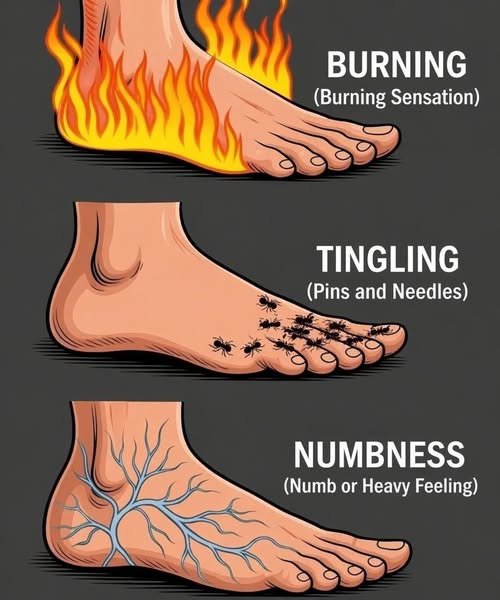
1. Numbness or tingling that doesn’t go away
Occasional tingling after sitting in one position is normal. But if you regularly feel numbness, “pins and needles,” or reduced sensation in your feet, it may indicate nerve-related issues.
This can sometimes be linked to:
- Poor blood circulation
- Vitamin deficiencies (especially B12)
- Nerve irritation or damage
- Long-term conditions like diabetes
When sensation changes become frequent, it is a signal worth checking.
2. Swelling in feet or ankles
Mild swelling after standing for long hours or heat exposure can happen to anyone. But swelling that keeps returning, or happens without a clear reason, should not be ignored.
Possible causes include:
- Fluid retention
- Circulatory problems
- Kidney or heart-related conditions
- Prolonged inactivity
If swelling becomes regular, it is important to monitor it closely.
3. Constantly cold feet
Cold feet even in warm environments may indicate that blood is not circulating properly to the lower extremities.
This could be associated with:
- Reduced blood flow
- Thyroid imbalance
- Anemia
- Peripheral circulation issues
If warmth does not improve the feeling, it may require medical evaluation.
4. Pain in feet while walking or even at rest
Foot pain is common, but persistent or unexplained pain is not something to overlook.
It may come from:
- Nerve pressure or inflammation
- Joint conditions like arthritis
- Heel or arch problems
- Circulation issues
Pain that interferes with walking or daily activity should be assessed.
5. Changes in foot color (pale, blue, or red tones)
Your feet should generally have a consistent natural color. Noticeable changes can be a sign that something is affecting oxygen or blood flow.
For example:
- Pale or white feet may suggest reduced blood supply
- Bluish tones may indicate low oxygen circulation
- Redness may point to inflammation or infection
If color changes are frequent or unexplained, they should not be ignored.
6. Cuts or wounds that heal slowly
A small cut on the foot usually heals quickly. If wounds take longer than expected, it can signal an issue with healing ability or circulation.
This is particularly important because slow healing may be associated with:
- Diabetes-related complications
- Poor blood circulation
- Weakened immune response
Even minor wounds should be monitored carefully.
7. Burning sensation in the feet
A burning feeling—especially at night—can be uncomfortable and disruptive.
It may be related to:
- Nerve damage or irritation
- Vitamin deficiencies
- Long-term blood sugar issues
- Pressure on nerves
If the sensation becomes frequent, it should be checked.
8. Thickened, brittle, or discolored toenails
Toenails often reflect internal and external health. Changes in texture or color may indicate fungal infections or other underlying concerns.
Watch for:
- Yellowing or darkening nails
- Thick or crumbling texture
- Nails separating from the nail bed
Early treatment can prevent worsening.
9. Weakness, imbalance, or difficulty sensing the ground
If you feel unsteady while walking or struggle to feel the ground properly, it may indicate nerve or sensory changes in the feet.
This can increase the risk of falls and injuries, especially if it progresses over time.
Possible causes include:
- Nerve damage
- Neurological issues
- Circulation problems
- Muscle weakness
Final thoughts
Your feet are often overlooked, but they quietly reflect many aspects of your health. Not every symptom means something serious, but persistent changes should never be dismissed.
The key is pattern recognition:
- One-time discomfort is usually harmless
- Repeated or worsening symptoms deserve attention
Listening to your body early can help you address issues before they become more serious.
If you want, I can also:
- turn this into a SEO-optimized blog with keywords and meta description
- convert it into a viral Facebook health post
- or create a short reel script for Instagram/TikTok