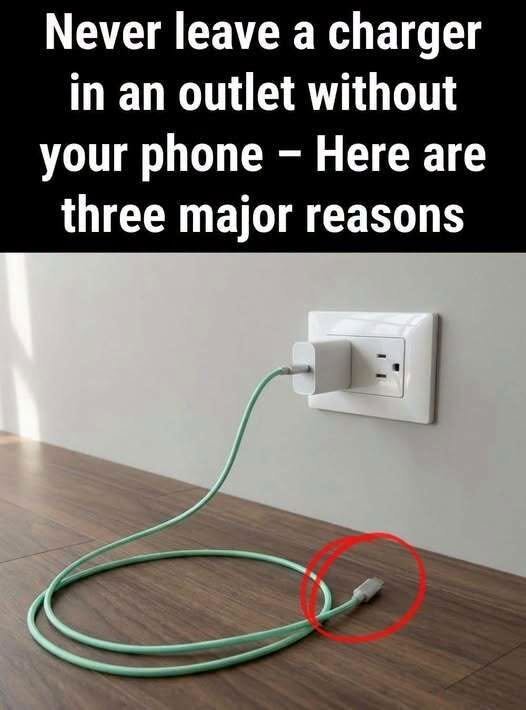
Many people have a daily habit of leaving their phone charger plugged into the wall even after removing their phone. It seems harmless—after all, the charger is not connected to anything. But is it actually safe?
The truth is more balanced than many viral warnings suggest. A modern, high-quality charger usually uses very little electricity when left plugged in, but there are still good reasons to avoid leaving chargers connected unnecessarily.
Let’s explore what really happens when a charger stays plugged in without a phone.
1. It Still Uses a Small Amount of Electricity
Even when your phone is not connected, a charger that remains plugged into an outlet can continue to draw a tiny amount of power.
This is called standby power or vampire energy.
A single charger usually consumes only a small amount, but across many devices in a home—such as:
- Phone chargers
- Laptop adapters
- Smart speakers
- Gaming consoles
- TVs
the wasted energy can add up over time.
Unplugging unused chargers can slightly reduce unnecessary electricity consumption.
2. Heat Can Build Up Over Time
Chargers convert electricity from the wall into the lower voltage needed by your phone. During this process, a small amount of energy becomes heat.
A charger left plugged in may remain slightly warm, especially if:
- It is old or damaged
- It is covered by clothing or furniture
- It is exposed to high temperatures
- It is a low-quality imitation charger
Excessive heat can shorten the lifespan of electronic components.
3. Damaged Chargers Can Become a Safety Risk
A properly made charger from a reputable manufacturer includes safety features such as:
- Over-voltage protection
- Short-circuit protection
- Temperature controls
However, damaged or counterfeit chargers may not have reliable protection.
Potential warning signs include:
- Cracked casing
- Frayed cables
- Burning smell
- Unusual buzzing sounds
- Excessive heat
If you notice these signs, replace the charger.
4. Power Surges Can Damage Electronics
A charger left connected to the outlet remains exposed to electrical events such as:
- Power surges
- Lightning-related spikes
- Electrical faults
While many modern chargers include protection, unplugging unused electronics during severe storms can provide an extra layer of safety.
5. Children and Pets May Be at Risk
Loose chargers left around the home can create hazards.
Children or pets may:
- Pull on cables
- Chew cords
- Touch damaged connectors
Keeping chargers stored safely can help prevent accidents.
Does Leaving a Charger Plugged In Cause a Fire?
A common internet claim is that every plugged-in charger is a fire danger. This is not accurate.
A quality charger that is in good condition and used correctly is generally safe.
Most risks come from:
- Poor-quality chargers
- Damaged equipment
- Overheating
- Incorrect use
Safety depends more on the condition and quality of the charger than simply whether it is plugged in.
How to Use Phone Chargers Safely
Follow these simple habits:
✅ Use Original or Certified Chargers
Choose chargers from trusted brands or certified manufacturers.
✅ Replace Damaged Cables
Do not continue using cables with exposed wires or broken insulation.
✅ Keep Chargers Ventilated
Avoid covering chargers with blankets, clothing, or other objects.
✅ Avoid Extreme Temperatures
Do not leave chargers in hot cars or direct sunlight.
✅ Unplug When Not Needed
Removing unused chargers saves a small amount of energy and reduces unnecessary wear.
What About Overnight Charging?
Modern smartphones and chargers are designed with safety systems that manage charging.
Most phones:
- Reduce charging speed as the battery fills
- Stop accepting significant power when full
- Monitor temperature
However, it is still wise to:
- Avoid charging under pillows or blankets
- Use a quality charger
- Keep charging areas clear
The Environmental Benefit of Unplugging
While one charger uses very little standby power, millions of households using many chargers can create unnecessary energy waste.
Small habits—such as unplugging unused electronics—can contribute to more efficient energy use.
Final Thoughts
Leaving a phone charger plugged in without your phone is usually not an immediate danger if the charger is high quality and in good condition. However, unplugging unused chargers can help reduce standby energy use, prevent wear, and lower risks associated with damaged or faulty equipment.
The best approach is simple: use reliable chargers, replace damaged ones, keep them away from heat, and unplug them when they are not needed.
A small habit can help keep your home safer and your electronics lasting longer.