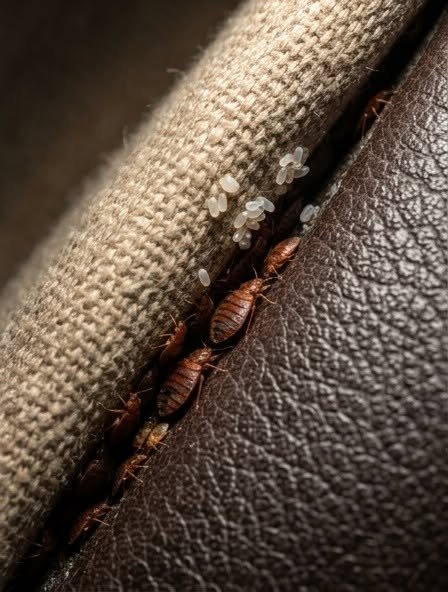
Few household discoveries are as unsettling as finding tiny insects—or mysterious dark specks—hidden in the seams of your furniture. Your mind immediately jumps to the worst-case scenario: “Are these bed bugs?”
Before you panic, take a closer look. While sofas and upholstered furniture can occasionally harbor bed bugs, many other harmless insects, debris, or even carpet beetles can be mistaken for them.
How to Tell if They Might Be Bed Bugs
Adult bed bugs are small, flat, oval-shaped insects about the size of an apple seed. They’re reddish-brown in color and tend to hide in narrow cracks and crevices during the day.
Other signs of a bed bug infestation include:
- Tiny black spots that resemble ink stains (bed bug droppings).
- Pale yellow shed skins.
- Clusters of tiny white eggs.
- Small blood stains on bedding or upholstery.
- Itchy bites that often appear in groups or lines, although bites alone aren’t enough to confirm bed bugs.
Could It Be Something Else?
Not every bug hiding in your sofa is a bed bug. People commonly mistake these for bed bugs:
- Carpet beetles and their larvae.
- Booklice.
- Fleas.
- Spider beetles.
- Small cockroach nymphs.
- Seeds, crumbs, or other household debris.
Accurate identification is important before taking any treatment steps.
What Should You Do?
If you suspect you’ve found bed bugs:
- Capture one of the insects in a sealed container or on clear tape.
- Inspect mattress seams, bed frames, cushions, and nearby furniture for additional signs.
- Vacuum thoroughly, paying special attention to cracks and seams.
- Wash removable fabric covers according to their care instructions.
- If you confirm bed bugs or continue finding evidence, consider contacting a licensed pest control professional.
Don’t Panic—Identify First
Finding something unusual in your sofa can be alarming, but jumping to conclusions may lead to unnecessary stress and expense. A careful inspection—or identification by a pest expert—can help determine whether you’re dealing with bed bugs or something far less concerning.
When it comes to household pests, the best first step is always the same: identify the culprit before deciding how to eliminate it.