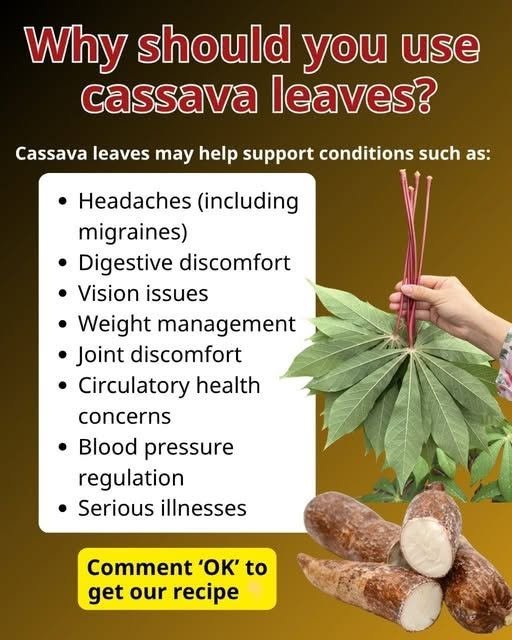
Learn how to safely prepare and cook cassava leaves the right way. This step-by-step guide shows traditional methods for boiling, pounding, and cooking cassava leaves into a nutritious, flavorful dish.
Cassava Leaves: How You Should Use Them Properly
Cassava leaves are a nutritious leafy green used in traditional dishes like cassava leaf stew. When cooked properly, they become tender, flavorful, and rich in nutrients. However, they must always be thoroughly processed before eating.
Important Safety Warning
Raw cassava leaves are not safe to eat.
They naturally contain compounds (cyanogenic glycosides) that can release cyanide if not properly prepared.
To make them safe:
- Always boil thoroughly
- Never eat raw or undercooked leaves
- Prefer pounding or blending before cooking
Traditional Ways to Prepare Cassava Leaves
1. Cleaning the Leaves
- Wash fresh cassava leaves thoroughly in clean water
- Remove thick stems and tough veins
- Keep only the tender green parts
2. Pounding or Blending (Important Step)
Traditional method:
- Pound leaves in a mortar and pestle until finely crushed
Modern method:
- Blend with a little water until smooth and slightly thick
This helps break down fibers and speeds up safe cooking.
3. First Boiling (Detox Step)
Place the pounded or blended leaves in a pot.
Add plenty of water and boil for 15–20 minutes.
- Drain the water completely
- This step removes most harmful compounds
4. Second Cooking (Flavor Building)
After draining:
Add fresh ingredients like:
- Onion
- Garlic
- Tomato
- Salt
- Palm oil or vegetable oil
- Ground meat, fish, or peanuts (optional)
Simmer for 30–45 minutes until soft and flavorful.
Popular Ways to Use Cassava Leaves
1. Cassava Leaf Stew
A thick, rich stew made with:
- Palm oil
- Ground peanuts or peanut butter
- Meat or smoked fish
- Spices and chili
2. Coconut Cassava Leaves
A Southeast Asian-style dish using:
- Coconut milk
- Garlic and shallots
- Chili peppers
Creamy and aromatic.
3. Simple Boiled Greens
Cooked with:
- Onions
- Salt
- Oil
Served as a side dish with rice or cassava.
4. Mixed Vegetable Dish
Combine with:
- Spinach
- Okra
- Eggplant
- Tomatoes
For a nutrient-rich vegetable mix.
Serving Ideas
Cassava leaves are commonly served with:
- White rice
- Fufu or ugali
- Boiled cassava or yams
- Grilled fish or meat
- Peanut-based sauces
Storage Tips
- Refrigerate cooked cassava leaves for up to 3 days
- Freeze for up to 2 months
- Reheat thoroughly before eating
Helpful Tips
- Always cook cassava leaves long enough to become very soft
- Use palm oil for authentic traditional flavor
- Adding peanut butter gives richness and protein
- Do not rush the boiling process
- Pair with starchy foods for a balanced meal
Frequently Asked Questions
Are cassava leaves safe to eat?
Yes, but only after proper boiling and preparation. Raw cassava leaves are unsafe.
What do cassava leaves taste like?
They have an earthy, slightly bitter flavor that becomes mild and rich when cooked.
Can I use frozen cassava leaves?
Yes, frozen leaves are often already processed and easier to cook safely.
What protein goes best with them?
Beef, goat meat, smoked fish, or peanuts are commonly used.
Final Thoughts
Cassava leaves are a highly nutritious ingredient when prepared correctly. With proper boiling and traditional cooking methods, they transform into a rich, flavorful dish enjoyed in many cultures. The key is patience and correct preparation to ensure both safety and great taste.