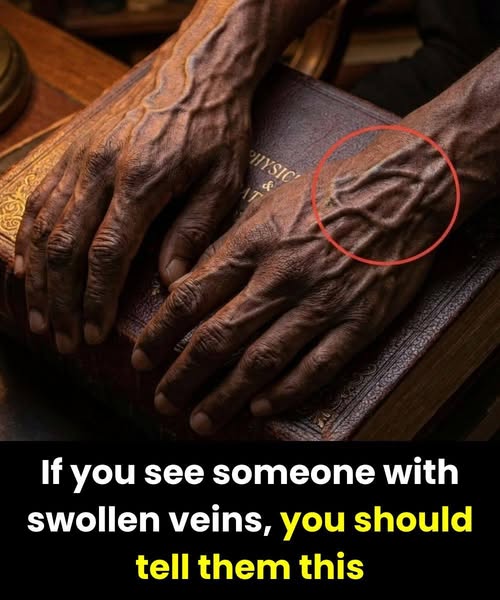
Visible veins are often misunderstood online. The idea that “if you have visible veins it means you are is usually an oversimplified fitness or health myth. The truth depends on body composition, genetics, blood flow, and environment, not a single condition.
1. The most common reason: low body fat
When people say someone has “visible veins,” they usually mean superficial veins showing under the skin (vascularity).
This often happens when:
- Subcutaneous fat (fat under the skin) is low
- Skin is thinner or tighter over muscles
So veins become more visible, especially on:
- Arms
- Hands
- Shoulders
- Legs
This is why athletes or lean individuals often look more “vascular.”
👉 Important: This does not automatically mean “you are healthy” or “you are fit”—just that you have less fat covering the veins.
2. Exercise and “pump” effect
After exercise:
- Muscles need more oxygen
- Blood flow increases
- Veins expand to carry more blood back to the heart
This creates the temporary effect called a “pump”
So veins can become more visible due to:
- Weight training
- Cardio
- Heat + exercise combined
This is temporary and normal.
3. Genetics play a big role
Some people naturally have:
- Veins closer to the skin
- Less connective tissue over veins
- Naturally more visible vascular patterns
So two people with the same body fat can look completely different.
4. Temperature and environment
Heat causes veins to expand (vasodilation):
- Hot weather → more visible veins
- Cold weather → veins shrink and disappear
- Hot showers or saunas → increased vascularity
This is a normal body temperature regulation response.
5. Hydration and sodium (misconception zone)
A popular myth says:
“Visible veins mean you are dehydrated”
This is not reliably true.
Hydration can slightly affect blood volume and appearance, but:
- Vein visibility is not a hydration test
- Dehydration is diagnosed by symptoms, not veins
6. Age and skin changes
As people age:
- Skin becomes thinner
- Elasticity decreases
- Veins become more noticeable
This is a natural part of aging.
7. When visible veins may signal a medical issue
Usually, visible veins are harmless. But sometimes they can be related to conditions like:
- Varicose Veins
- Vein inflammation (phlebitis)
- Circulatory issues (less common)
Warning signs include:
- Pain or heaviness in legs
- Swelling
- Bulging, twisted veins
- Skin discoloration near veins
- Sudden new vein changes on one limb
These are different from normal “fit-looking” veins.
8. So what does it actually mean?
Visible veins can mean:
- Low body fat ✔️
- Recent exercise ✔️
- Heat exposure ✔️
- Genetics ✔️
- Aging ✔️
- Sometimes medical vein issues (less common) ⚠️
But it does NOT automatically mean:
- You are healthier
- You are dehydrated
- You are fitter than others
- You have a medical condition
Bottom line
Visible veins are mostly a normal physical variation influenced by body fat, genetics, and blood flow—not a direct health score.