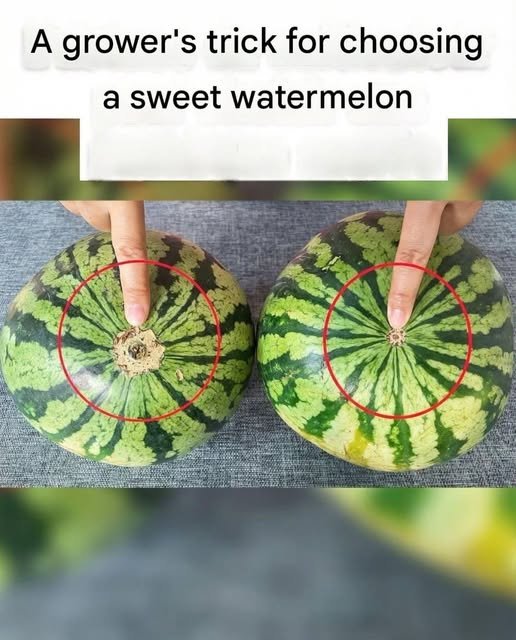
There’s nothing quite as refreshing as biting into a perfectly ripe watermelon on a warm day. Its crisp texture, juicy flesh, and natural sweetness make it a favourite fruit during the summer months. However, choosing the right watermelon can sometimes feel like a gamble. Many shoppers have experienced the disappointment of cutting open a watermelon that looked perfect on the outside, only to find it bland, pale, or lacking flavour.
The good news is that while no method can guarantee the perfect watermelon every single time, there are several reliable visual and physical clues that can significantly improve your chances of selecting a sweet, ripe fruit. Farmers, produce sellers, and experienced shoppers often rely on these signs because they reveal how well the watermelon matured on the vine before it was harvested.
In this guide, you’ll discover the most important characteristics to look for when shopping, along with common myths and proper storage tips to help you enjoy every slice.
Why Watermelon Ripeness Matters
Watermelons continue to soften slightly after harvest, but they do not become significantly sweeter once picked. Most of their sugar develops while the fruit is still attached to the vine. That’s why selecting a watermelon that was harvested at peak ripeness is essential.
A ripe watermelon typically offers:
- A naturally sweet flavour
- Crisp and juicy flesh
- Bright red or deep pink interior
- Pleasant aroma
- Higher levels of antioxidants such as lycopene
- Good amounts of vitamins A and C
Choosing wisely means better taste, better nutrition, and less food waste.
1. Check the Field Spot
One of the easiest ways to judge a watermelon is by looking at its field spot.
The field spot is the large patch on the underside where the watermelon rested on the ground while growing.
What You Want
Look for a creamy yellow or buttery golden spot.
This colour indicates the watermelon remained on the vine long enough to ripen naturally under the sun.
What to Avoid
Avoid melons with:
- White field spots
- Pale green spots
- Very small or almost invisible field spots
These signs may suggest the watermelon was harvested before reaching full maturity.
2. Choose a Dull Rather Than Shiny Rind
Many people assume shiny fruit looks fresher, but that’s not necessarily true for watermelons.
A ripe watermelon usually develops a dull, matte finish.
Young or immature melons often have glossy skin because they haven’t fully matured.
When comparing two similar watermelons, the one with the less shiny rind is often the better choice.
3. Pick the Heaviest One
Weight is one of the simplest indicators of quality.
Lift several watermelons that are approximately the same size.
Choose the one that feels heavier.
Extra weight generally means:
- Higher water content
- Better juiciness
- More developed flesh
A lightweight watermelon may have started drying out or may not have developed properly.
4. Examine the Stripe Pattern
Most watermelons have alternating light and dark green stripes.
Healthy ripe watermelons often display:
- Strong colour contrast
- Well-defined stripes
- Even colouring across the surface
Faded or blurry stripes can sometimes indicate a less mature fruit.
Keep in mind that different watermelon varieties naturally have different patterns, so compare only melons of the same variety.
5. Look for a Uniform Shape
A good watermelon should have a symmetrical appearance.
Whether it’s round or oval, the fruit should not have:
- Large bumps
- Flat sides
- Deep dents
- Uneven bulges
These irregularities may result from inconsistent watering or uneven growth.
Many people believe:
- Round watermelons tend to be sweeter.
- Oval watermelons are often slightly juicier.
While this isn’t scientifically proven, many experienced growers share this observation.
6. Inspect the Stem
Sometimes a watermelon is sold with a small piece of stem attached.
A dry, brown stem usually means:
- The fruit ripened naturally.
- It detached from the vine when mature.
A fresh green stem may suggest:
- Early harvesting
- Less developed sweetness
If there’s no stem attached, simply use the other signs on this list.
7. Give It a Gentle Tap
Tapping a watermelon is a long-standing tradition among experienced shoppers.
Here’s what to listen for:
Deep Hollow Sound
Usually indicates:
- Plenty of water
- Firm flesh
- Good ripeness
Dull or Flat Sound
May suggest:
- Overripe fruit
- Underripe fruit
- Soft interior
Although this method takes practice, it becomes more useful when combined with the other visual clues.
8. Avoid Visible Damage
Carefully inspect the watermelon before buying.
Avoid fruit with:
- Soft spots
- Cracks
- Deep cuts
- Leaking juice
- Mould
- Large bruises
Small scratches on the rind are generally harmless and usually don’t affect the inside of the fruit.
9. Look for a Firm Rind
Gently press the watermelon.
A ripe watermelon should feel:
- Firm
- Solid
- Heavy
- Hard to dent
Avoid fruit that feels soft or gives way under gentle pressure.
10. Size Isn’t Everything
Many shoppers automatically reach for the biggest watermelon.
However, larger doesn’t always mean sweeter.
Instead of focusing only on size, combine several indicators:
- Creamy field spot
- Heavy weight
- Dull rind
- Healthy shape
- Firm texture
A medium-sized, well-ripened watermelon often tastes much better than an oversized one.
Common Watermelon Myths
Myth 1: Sugar Spots Always Mean Sweetness
Some watermelons develop rough brown patches or web-like markings.
While these may result from natural growing conditions or pollination, they do not guarantee a sweeter watermelon.
Myth 2: Bigger Is Always Better
Large watermelons can still be watery or bland.
Ripeness matters much more than size.
Myth 3: Every Round Watermelon Is Sweeter
Although many people believe round melons are sweeter than oval ones, flavour depends more on growing conditions and ripeness than shape alone.
Myth 4: Colour Alone Predicts Taste
A dark green rind may look appealing, but rind colour varies greatly between watermelon varieties.
Always consider several clues rather than relying on one feature.
How to Store Watermelon Properly
After choosing the perfect watermelon, proper storage helps preserve its flavour and freshness.
Whole Watermelon
Store at room temperature for several days if you plan to eat it soon.
If keeping it longer, refrigeration can help extend freshness.
Cut Watermelon
After slicing:
- Cover tightly with plastic wrap or place in an airtight container.
- Refrigerate immediately.
- Eat within three to five days for the best taste and texture.
Nutritional Benefits of Watermelon
Besides being delicious, watermelon is packed with nutrients.
It provides:
- Vitamin A
- Vitamin C
- Potassium
- Magnesium
- Lycopene
- Citrulline
- Antioxidants
- Over 90% water for hydration
These nutrients support hydration, immune function, healthy skin, and overall wellness.
Final Thoughts
Choosing a sweet watermelon doesn’t have to rely on luck. By paying attention to simple visual and physical signs—such as a creamy yellow field spot, a dull rind, heavy weight, firm texture, and a symmetrical shape—you can greatly improve your chances of bringing home a delicious fruit.
Remember that no single clue is foolproof. The best approach is to combine several indicators when making your selection. With a little practice, you’ll become much more confident at spotting ripe, juicy watermelons and avoiding bland disappointments.
The next time you visit the market, take an extra minute to inspect your watermelon carefully. Those small details can make all the difference between an ordinary fruit and one that’s bursting with refreshing sweetness.