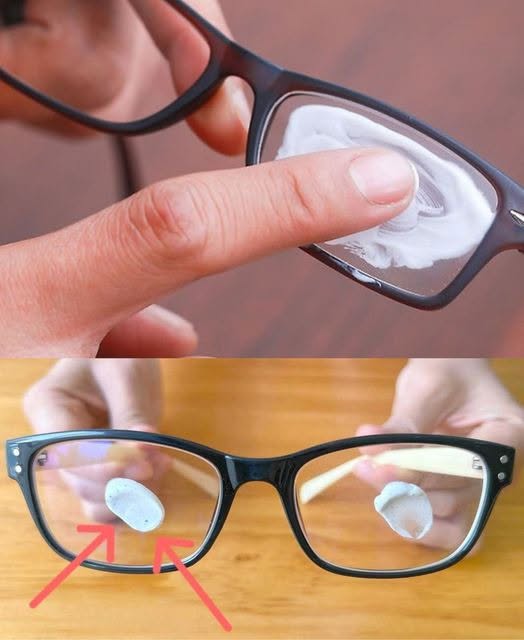
There’s a reason opticians get nervous when they hear “I saw a hack online that removes scratches from glasses instantly.”
It’s because scratched lenses don’t behave like dirty surfaces—they’re physically damaged. And no liquid, paste, or miracle trick truly restores them to factory condition.
But let’s break down what’s actually happening, why these hacks go viral, and what you can realistically do instead.
The viral claim: “Scratches disappear instantly”
You’ve probably seen it:
A pair of scratched glasses gets rubbed with toothpaste, baking soda, or some mystery solution. After a few seconds of polishing, the lens looks “perfect” again.
It feels satisfying. It looks like magic.
But what’s really happening is not repair—it’s illusion.
Most of these methods either:
- Fill in scratches temporarily with residue
- Lightly buff the surface, changing how light reflects
- Or rely on camera tricks (lighting + angles)
The scratch is still there. It’s just harder to see for a moment.
Why scratches on glasses are different
Modern glasses are not just plain plastic or glass anymore.
They often include:
- Anti-reflective coatings
- UV protection layers
- Scratch-resistant coatings (not scratch-proof)
When a scratch happens, it usually damages one or more of these layers. That means:
- You can’t “wipe it out”
- You can’t dissolve it safely
- You can’t polish it away without side effects
In many cases, trying to fix it at home removes more coating and makes vision worse.
The most common “fixes” (and the truth behind them)
🪥 Toothpaste method
This is the most popular one.
It works by being mildly abrasive. It can slightly smooth plastic surfaces, which may reduce the appearance of very fine scratches.
But the downside:
- It often creates a cloudy finish
- It can damage anti-glare coatings
- It does not truly remove deeper scratches
🧂 Baking soda paste
Similar idea—gentle abrasion.
But it’s uneven and harder to control than toothpaste, which increases the risk of:
- Smearing
- Micro-abrasions
- Distorted vision in certain lighting
🧴 Car wax / furniture polish
This one is deceptive.
It doesn’t fix anything—it just fills scratches temporarily.
So what you’re seeing is:
- A smoother surface illusion
- That wears off quickly
- Often leaving smudges or glare issues
🧪 “Glass repair liquids”
These are usually marketing-heavy products that claim optical restoration.
In reality:
- They may reduce visibility slightly
- But cannot rebuild missing lens layers
- And can interfere with coatings
What actually works (and what opticians recommend)
✔️ 1. Lens replacement (the only real fix)
If scratches interfere with vision, replacing lenses is the only reliable solution.
Frames are usually reusable, so you don’t need a full new pair.
✔️ 2. Professional resurfacing (limited cases)
Some optical labs can polish certain uncoated plastic lenses, but:
- It reduces lens thickness accuracy
- It may distort prescription strength
- It doesn’t work on coated lenses (most modern glasses)
✔️ 3. Accepting minor scratches (when safe)
If scratches are:
- Out of your direct line of sight
- Not affecting clarity
- Only visible under certain light
Then replacement may not be necessary yet.
The real prevention strategy
Most lens damage doesn’t come from dramatic accidents—it comes from small habits:
- Wiping glasses with clothing or tissue
- Tossing them into bags without a case
- Cleaning them dry with dust still on the surface
Better habits make a huge difference:
- Always rinse before wiping
- Use microfiber cloth only
- Store in a hard case
- Avoid leaving them face-down on surfaces
The honest conclusion
Scratched glasses don’t have a true “erase button.”
Anything claiming:
“Apply this and scratches disappear instantly”
is either:
- temporary masking
- cosmetic trickery
- or pure misinformation designed for clicks
The real solution isn’t hiding damage—it’s understanding when to maintain, when to ignore, and when to replace.
Because when it comes to vision, clarity isn’t something worth gambling with on a viral hack.