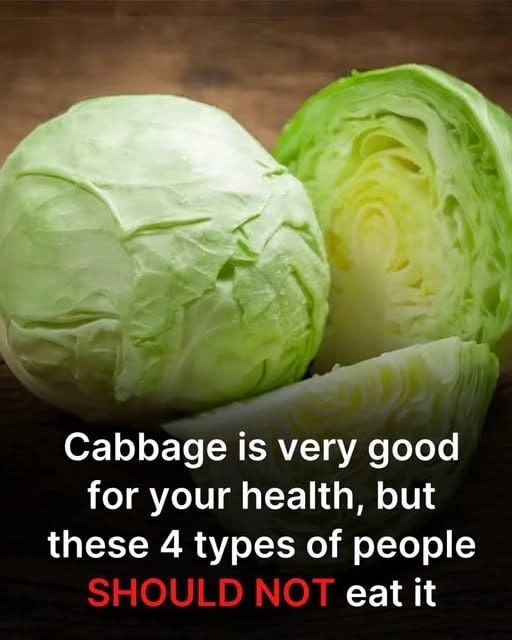
Most people can safely eat cabbage, including Cabbage as part of a healthy diet. But there are a few groups of people who may need to limit it, prepare it differently, or be cautious.
Here are the main situations doctors and dietitians usually mean when they talk about people who “shouldn’t” eat cabbage:
1. People with certain thyroid conditions (especially if eaten raw in large amounts)
Cabbage belongs to the cruciferous vegetable family. Raw cruciferous vegetables contain compounds called goitrogens, which can interfere with iodine use in the thyroid.
This matters mostly if someone:
- Has iodine deficiency
- Has untreated hypothyroidism
- Eats very large amounts of raw cabbage regularly
Cooking reduces most of this effect.
Examples:
- Large daily raw cabbage smoothies
- Huge amounts of raw coleslaw every day
Moderate cooked cabbage is usually fine for most people with thyroid issues.
2. People prone to gas, bloating, or IBS
Cabbage is high in fiber and certain fermentable carbohydrates (FODMAPs), which can trigger:
- Gas
- Bloating
- Cramping
- Diarrhea in sensitive people
This is especially common in people with:
- Irritable Bowel Syndrome
- Sensitive digestion
- Recent stomach illness
Cooked cabbage is often easier to tolerate than raw cabbage.
3. People taking blood thinners like warfarin
Cabbage contains vitamin K, which affects blood clotting.
People taking medications such as:
- Warfarin
should avoid suddenly increasing or decreasing cabbage intake dramatically.
The issue is consistency, not total avoidance. Doctors usually recommend keeping vitamin K intake stable.
4. People with severe kidney issues (certain cases)
Some people with advanced kidney disease need to monitor:
- Potassium
- Fluid balance
- Fiber tolerance
Cabbage is not usually the worst offender, but dietary restrictions for kidney disease can vary depending on lab results and dialysis status.
These people should follow individualized medical nutrition advice.
Important perspective
Internet headlines like “4 people who should NEVER eat cabbage” are usually exaggerated.
For most healthy people, cabbage can provide:
- Fiber
- Vitamin C
- Vitamin K
- Antioxidants
and is generally considered nutritious.
If you want, I can also explain:
- whether raw or cooked cabbage is healthier
- cabbage and thyroid myths
- best ways to reduce cabbage bloating
- whether cabbage helps with weight loss or diabetes.