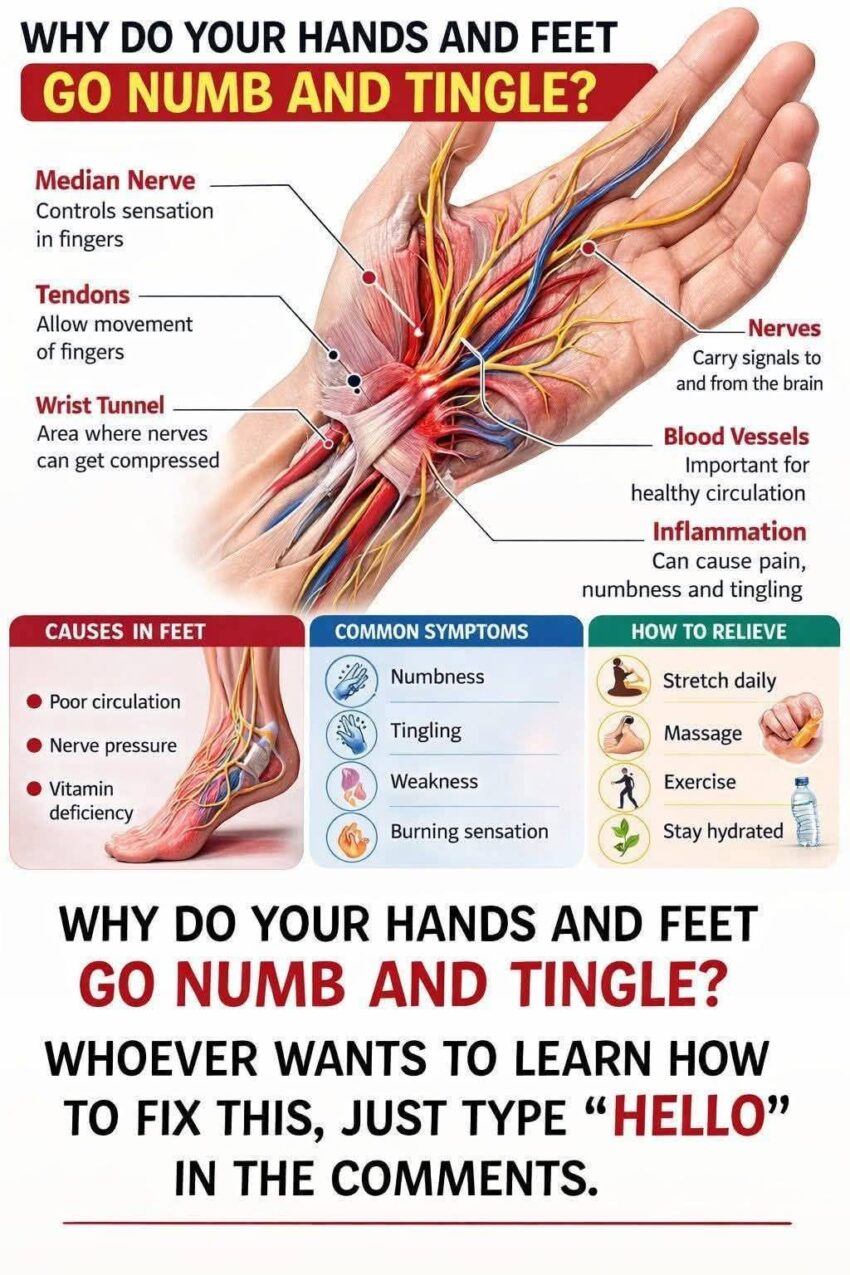
Wondering why your hands fall asleep? Learn the most common causes of hand numbness and tingling, effective natural remedies, prevention tips, and when to seek medical attention.
Why Do Your Hands Fall Asleep?
Have you ever woken up in the middle of the night with a numb hand or experienced a sudden tingling sensation while working, reading, or using your phone? This common phenomenon is often described as having your hands “fall asleep.” While it can be uncomfortable and sometimes alarming, the cause is usually temporary and harmless.
Hand numbness occurs when nerves or blood vessels are compressed, reducing normal sensation and communication between the brain and the affected area. In many cases, changing your position restores normal feeling within minutes. However, recurring numbness may indicate an underlying health condition that deserves attention.
This article explores the most common causes of hand numbness, natural remedies that may help, and signs that it’s time to consult a healthcare professional.
What Causes Your Hands to Fall Asleep?
1. Pressure on a Nerve
The most common reason for temporary hand numbness is prolonged pressure on a nerve. Sleeping with your arm under your body, resting your elbow on a hard surface, or maintaining the same position for too long can compress nerves and interrupt signal transmission.
Common symptoms include:
- Tingling or pins-and-needles sensation
- Temporary numbness
- Weakness that quickly improves after movement
2. Carpal Tunnel Syndrome
Carpal tunnel syndrome occurs when the median nerve becomes compressed as it passes through the wrist. It is especially common among people who perform repetitive hand movements.
Symptoms may include:
- Numbness in the thumb, index, and middle fingers
- Tingling that worsens at night
- Hand weakness or difficulty gripping objects
3. Poor Circulation
Restricted blood flow can contribute to numbness and tingling in the hands. Sitting or sleeping in awkward positions may temporarily reduce circulation, leading to that familiar “asleep” feeling.
Contributing factors may include:
- Tight clothing or accessories
- Prolonged inactivity
- Certain cardiovascular conditions
4. Vitamin Deficiencies
Deficiencies in certain vitamins, particularly B vitamins, can affect nerve health.
Important nutrients include:
- Vitamin B12
- Vitamin B6
- Folate
- Vitamin E
Low levels may lead to:
- Persistent tingling
- Numbness in hands and feet
- Muscle weakness
5. Neck or Spine Problems
Nerves that control hand sensation originate in the neck and upper spine. Conditions such as herniated discs or cervical nerve compression can cause numbness that radiates into the arms and hands.
Additional symptoms may include:
- Neck pain
- Shoulder discomfort
- Weakness in the arm
6. Diabetes
High blood sugar levels can damage nerves over time, a condition known as diabetic neuropathy.
Common signs include:
- Numbness in hands and feet
- Burning sensations
- Reduced sensitivity to touch
7. Anxiety and Stress
Anxiety can sometimes trigger physical symptoms, including tingling and numbness. Changes in breathing patterns during periods of stress may temporarily alter blood flow and nerve sensitivity.
Symptoms often occur alongside:
- Rapid heartbeat
- Shortness of breath
- Feelings of panic or worry
Natural Remedies That May Help
Improve Your Sleeping Position
If numbness occurs during sleep, evaluate your sleeping posture.
Try these strategies:
- Avoid sleeping on your arms
- Use supportive pillows
- Keep wrists in a neutral position
- Consider wrist braces if nighttime symptoms are frequent
Stretch and Move Regularly
Gentle movement helps restore circulation and relieve nerve compression.
Helpful exercises include:
- Wrist circles
- Finger stretches
- Shoulder rolls
- Neck mobility exercises
Take regular movement breaks if you spend long periods typing or using electronic devices.
Apply Warm Compresses
Heat may help relax muscles and improve circulation around compressed nerves.
How to use:
- Apply a warm compress to the affected area.
- Leave it in place for 10 to 15 minutes.
- Repeat as needed throughout the day.
Maintain Healthy Vitamin Levels
A nutrient-rich diet supports nerve function and overall health.
Foods rich in B vitamins include:
- Eggs
- Fish
- Lean meats
- Dairy products
- Leafy green vegetables
- Fortified cereals
Consult a healthcare provider before starting supplements.
Practice Good Ergonomics
Proper hand and wrist positioning can reduce nerve strain.
Tips include:
- Keep wrists straight while typing
- Use ergonomic keyboards and mouse devices
- Adjust chair and desk height
- Take frequent breaks from repetitive tasks
Stay Physically Active
Regular exercise promotes healthy circulation and may reduce the risk of nerve-related problems.
Good options include:
- Walking
- Swimming
- Cycling
- Yoga
- Stretching routines
Manage Stress
Reducing stress may help minimize anxiety-related tingling sensations.
Consider:
- Deep breathing exercises
- Meditation
- Progressive muscle relaxation
- Regular physical activity
- Adequate sleep
When Should You See a Doctor?
Occasional hand numbness is usually not a cause for concern. However, medical evaluation is recommended if symptoms:
- Occur frequently
- Persist for long periods
- Become progressively worse
- Interfere with daily activities
- Are accompanied by weakness
- Affect only one side of the body
- Occur with speech difficulties or facial drooping
Sudden numbness combined with weakness, confusion, or difficulty speaking requires immediate medical attention, as these symptoms may indicate a serious neurological condition.
Prevention Tips
To reduce the likelihood of hand numbness:
- Avoid prolonged pressure on your arms and wrists.
- Maintain good posture throughout the day.
- Exercise regularly.
- Eat a balanced diet rich in essential nutrients.
- Manage chronic conditions such as diabetes.
- Take breaks from repetitive hand movements.
- Use ergonomic workstations when possible.
Final Thoughts
Hands that “fall asleep” are often the result of temporary nerve compression or reduced circulation and typically resolve quickly once pressure is relieved. However, frequent or persistent numbness can sometimes signal an underlying condition such as carpal tunnel syndrome, vitamin deficiencies, diabetes, or spinal nerve issues.
By improving posture, staying active, supporting nerve health through proper nutrition, and managing stress, many people can reduce episodes of hand numbness naturally. If symptoms become recurrent or severe, consulting a healthcare professional is the best way to identify the underlying cause and receive appropriate treatment.