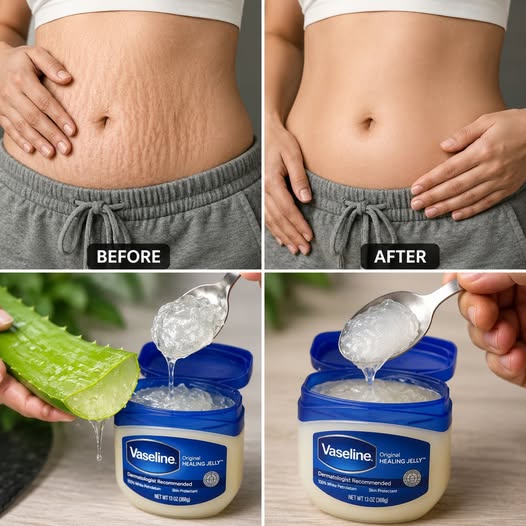
No More Hiding Your Stretch Marks! Here’s What Can Actually Help
Stretch marks are extremely common and can appear after pregnancy, growth spurts, weight changes, or muscle gain. While no home remedy can completely erase them, some treatments may help improve their appearance over time.
Remedies That May Help
1. Moisturize Regularly
Keeping the skin hydrated can improve its texture and appearance. Products containing:
- Hyaluronic acid
- Cocoa butter
- Shea butter
- Centella asiatica (cica)
may help the skin feel smoother, although evidence for preventing or removing stretch marks is limited.
2. Retinoid Creams (for Recent Stretch Marks)
Topical retinoids derived from vitamin A can stimulate collagen production and may improve newer stretch marks that are still red or pink.
Important: Retinoids should not be used during pregnancy or while trying to become pregnant unless advised by a healthcare professional.
3. Gentle Massage
Massaging moisturizers or oils into the skin may temporarily improve skin softness and support circulation, though it won’t remove stretch marks.
4. Professional Treatments
For more noticeable improvement, dermatologists may recommend:
- Laser therapy
- Microneedling
- Radiofrequency treatments
- Chemical peels (in selected cases)
These treatments generally have stronger evidence than home remedies.
What to Expect
Stretch marks usually fade naturally from red or purple to lighter, silvery lines over time. Most treatments improve their appearance rather than eliminate them completely.
Be Cautious of “Miracle Cures”
Social media posts often claim that ingredients such as lemon juice, toothpaste, baking soda, or other DIY mixtures can erase stretch marks. There is little scientific evidence supporting these claims, and some may irritate or damage the skin.
When to See a Dermatologist
Consider professional advice if:
- Stretch marks appear suddenly without an obvious cause.
- They are extensive or accompanied by other symptoms.
- You’re interested in medical treatments with stronger evidence.
The most realistic goal is gradual improvement in texture and visibility rather than complete removal. Consistent skincare and, when appropriate, dermatologist-guided treatments tend to provide the best results.