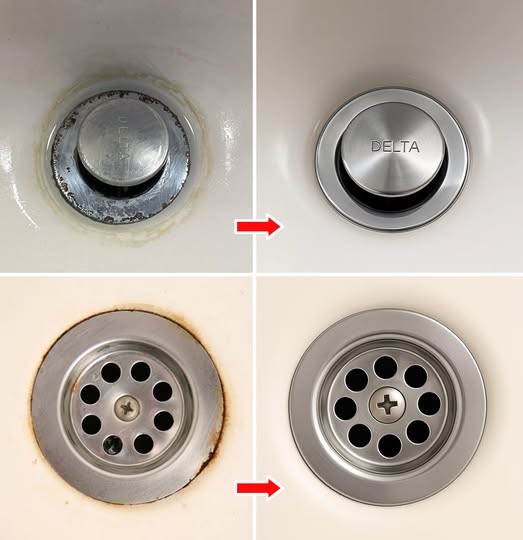
A dark circle around a faucet can come from several different causes, and the best removal method depends on what the stain actually is. Here’s a detailed guide to identify and remove it.
Step 1: Identify the Type of Dark Ring
1. Mineral Deposits + Dirt (Most Common)
Appearance:
- Gray, brown, or black ring around the faucet base
- Feels rough or crusty
- Common in hard-water areas
Cause:
Water seeps under the faucet base and leaves behind minerals that trap dirt.
2. Mold or Mildew
Appearance:
- Black spots or a dark ring
- May feel slimy when wet
- Often found in bathrooms
Cause:
Moisture trapped around the faucet base.
3. Corrosion or Metal Staining
Appearance:
- Dark brown, black, green, or rusty ring
- Doesn’t scrub off easily
- May be part of the metal finish itself
Cause:
Oxidation of metal or deterioration of the faucet finish.
4. Damaged Caulk or Sealant
Appearance:
- Black line directly around the faucet base
- Looks like it is coming from underneath the faucet
Cause:
Old caulk collects dirt and mold.
Step 2: Start With the Safest Cleaning Method
Vinegar Treatment
You’ll need:
- White vinegar
- Paper towels or cloth
- Old toothbrush
Procedure:
- Dry the area.
- Soak paper towels in white vinegar.
- Wrap them around the faucet base.
- Leave for 30–60 minutes.
- Remove and scrub with a toothbrush.
- Rinse with water.
- Dry completely.
This dissolves mineral deposits and loosens grime.
Step 3: Use Baking Soda for Stubborn Rings
Baking Soda Paste
Mix:
- 3 parts baking soda
- 1 part water
Procedure:
- Apply the paste to the ring.
- Let it sit for 15–20 minutes.
- Scrub gently with a toothbrush.
- Rinse and dry.
For extra cleaning power, apply vinegar after the paste and allow the fizzing action to work for a few minutes.
Step 4: Remove Mold or Mildew
Bleach Solution
Mix:
- 1 part bleach
- 10 parts water
Procedure:
- Apply to the affected area.
- Wait 5–10 minutes.
- Scrub gently.
- Rinse thoroughly.
- Dry the area.
Safety:
- Wear gloves.
- Ensure good ventilation.
- Never mix bleach with vinegar or other cleaners.
Hydrogen peroxide (3%) is another effective option for mold.
Step 5: Clean Under the Faucet Base
If the ring keeps returning, dirt may be trapped underneath.
Procedure
- Turn off water supply valves under the sink.
- Remove decorative caps and mounting hardware if necessary.
- Lift the faucet slightly.
- Clean underneath with:
- Vinegar
- Mild detergent
- Toothbrush
- Dry thoroughly.
- Reinstall the faucet.
Step 6: Replace Old Caulk
If the dark ring is actually moldy or discolored caulk:
- Remove old caulk using a plastic scraper.
- Clean the area with rubbing alcohol.
- Let it dry completely.
- Apply a thin bead of bathroom or kitchen silicone caulk.
- Smooth with a wet finger or caulk tool.
- Allow to cure according to the manufacturer’s instructions.
Step 7: If It’s Corrosion
If you’ve cleaned repeatedly and the dark ring remains:
- The faucet finish may be damaged.
- Chrome plating may have worn away.
- The countertop surface around the faucet may be permanently stained.
In this case:
- Metal polish may help on metal surfaces.
- Countertop stain removers may help on stone surfaces.
- Replacing the faucet may be the only complete fix if the finish has deteriorated.
Prevention
- Wipe the faucet base dry after use.
- Clean weekly with mild soap.
- Fix leaks promptly.
- Reapply silicone sealant if gaps develop.
- Remove hard-water deposits monthly with vinegar.
A photo would make it much easier to diagnose. A dark ring caused by mold, hard-water buildup, corrosion, and damaged caulk can look similar, but each requires a different treatment. Upload a picture and I can tell you exactly which one you’re dealing with and the most effective way to remove it.